
The Shire
The Shire is the primary homeland of the Hobbits in Middle-earth and one of the most thoroughly described regions in The Lord of the Rings.
Located in the northwest of the continent, the Shire is a rural, peaceful land defined by agriculture, close-knit communities, and long-standing traditions.
Though politically insignificant on the world stage, it ultimately plays a crucial role in the events surrounding the War of the Ring.
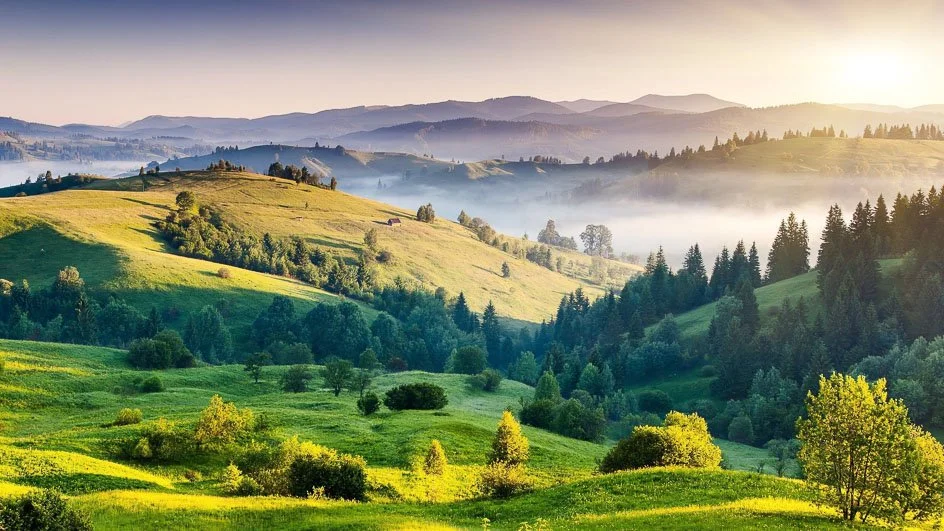
Tolkien presents the Shire as a land deliberately removed from the ambitions of power, making it a symbolic representation of home, continuity, and what is at stake when darkness spreads across Middle-earth.
Geographic Location and Borders of the Shire
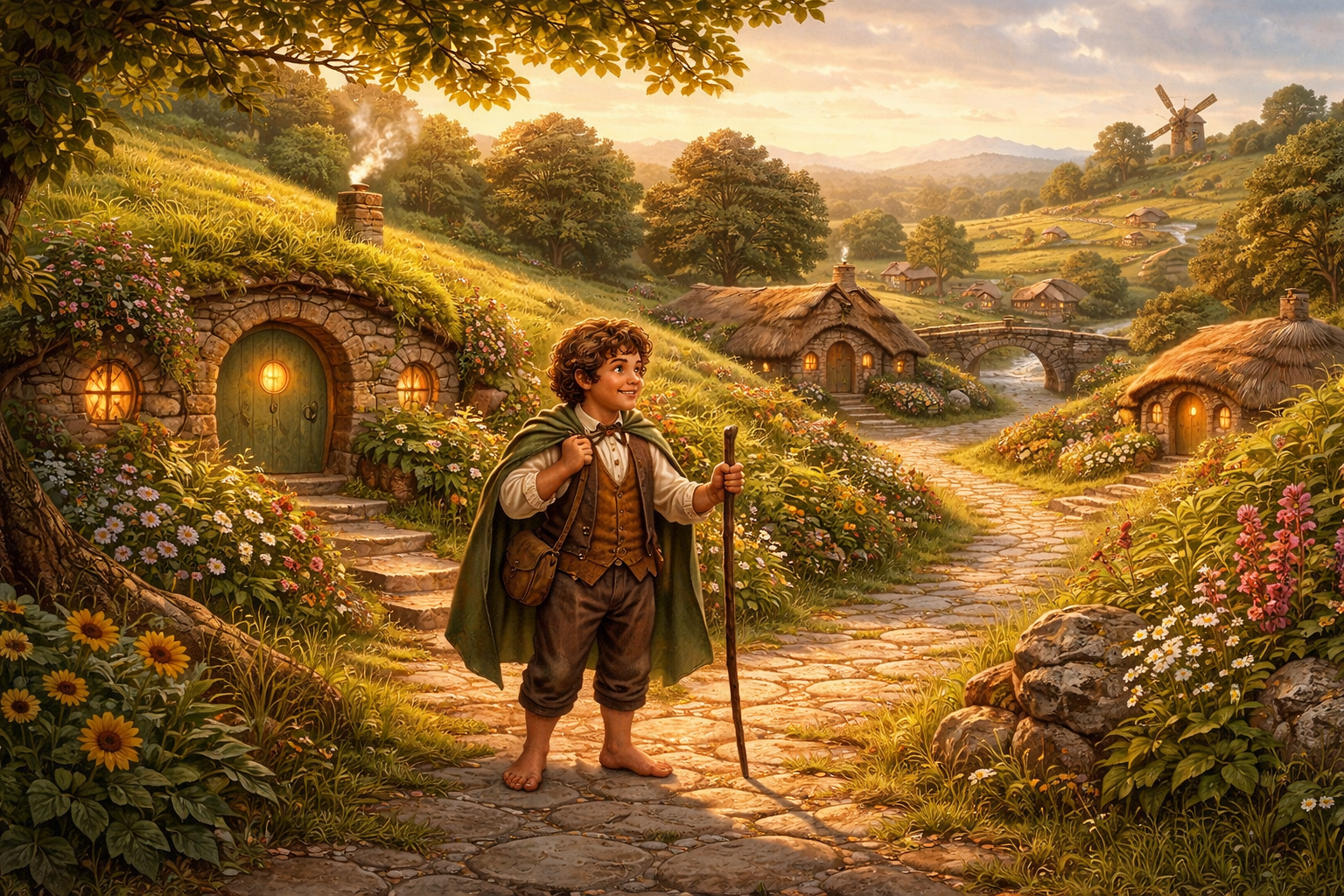
Tolkien describes the Shire as approximately forty leagues from east to west and fifty leagues from north to south, with an estimated area of around 18,000 square miles.
The Shire is located in Eriador, west of the Misty Mountains and east of the Blue Mountains. Its heartland lies between the Brandywine River (Baranduin) to the east and the Far Downs to the west.
Traditionally described borders include uplands to the north toward the Hills of Evendim and marshy or lightly settled lands to the south. Over time, the Shire expanded beyond its original boundaries to include Buckland east of the Brandywine and, later, the Westmarch in the Fourth Age.
Founding of the Shire
Before settling the Shire, Hobbits lived east of the Misty Mountains near the Anduin River. Population pressures, growing unease, and a desire for stability led several groups to migrate westward into Eriador over many generations.
T.A. 1601 – Shire Reckoning Begins
The official founding of the Shire is dated to Third Age 1601, which became Year 1 of Shire Reckoning (S.R. 1). In this year, two Hobbit leaders, Marcho and Blanco, led settlers from Bree-land across the Brandywine.
They were granted permission to settle the land by King Argeleb II of Arthedain, marking the Shire as a recognized Hobbit territory. With the later collapse of the northern kingdoms, the Shire became effectively self-governing.
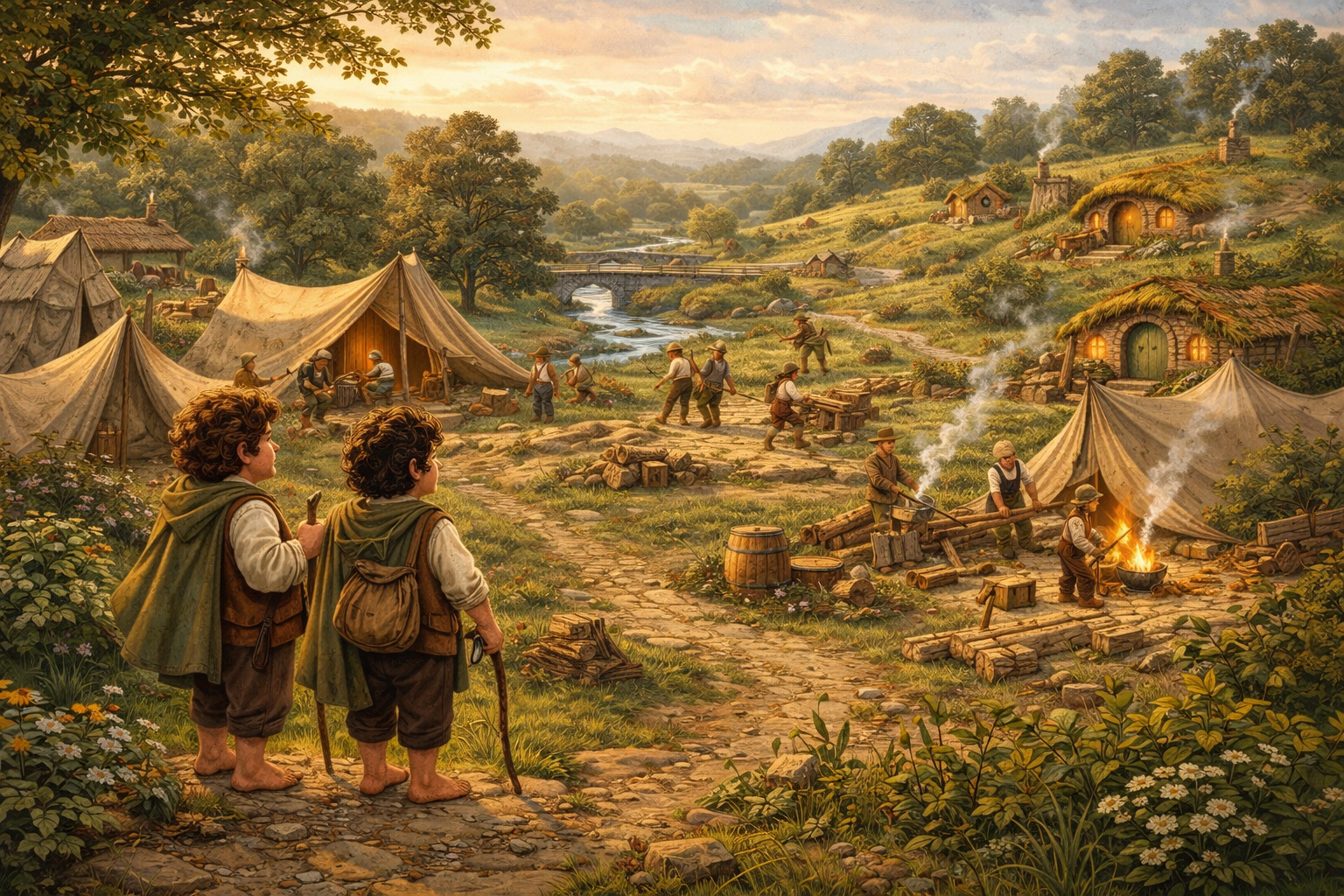
Political Structure and Governance of the Shire
Absence of Central Power
The Shire is notable for its lack of centralized authority. It has no standing army, no monarch, and very little formal legislation. Order is maintained through custom, local responsibility, and social expectation.
The Mayor of Michel Delving
The Mayor is the only regularly elected official in the Shire. Based in Michel Delving, the Mayor serves as head of the postal service, supervisor of the Shirriffs, and organizer of public events.
The Thain
After the disappearance of the Kings of Arnor, the office of Thain emerged as a symbolic leadership position. The role later became hereditary within the Took family, though it was rarely exercised in any military capacity.
The Shirriffs
The Shirriffs function as the Shire’s informal law enforcement. Their duties mostly involve managing stray animals, resolving minor disputes, and maintaining basic order.
Administrative Divisions of the Shire
Northfarthing
The Four Farthings
The original Shire is divided into four geographic regions known as Farthings, meaning “fourths.”
Westfarthing
Southfarthing
Each Farthing developed its own local identity, shaped by climate, terrain, and settlement patterns.
The Eastmarch and Westmarch
Eastfarthing
Buckland, east of the Brandywine, became informally known as the Eastmarch. After the War of the Ring, the Shire expanded westward to include the Westmarch, a sparsely settled frontier area.
Major Settlements of the Shire
Hobbiton
Hobbiton is a small village in the Westfarthing, best known as the home of Bag End, the residence of Bilbo and Frodo Baggins.
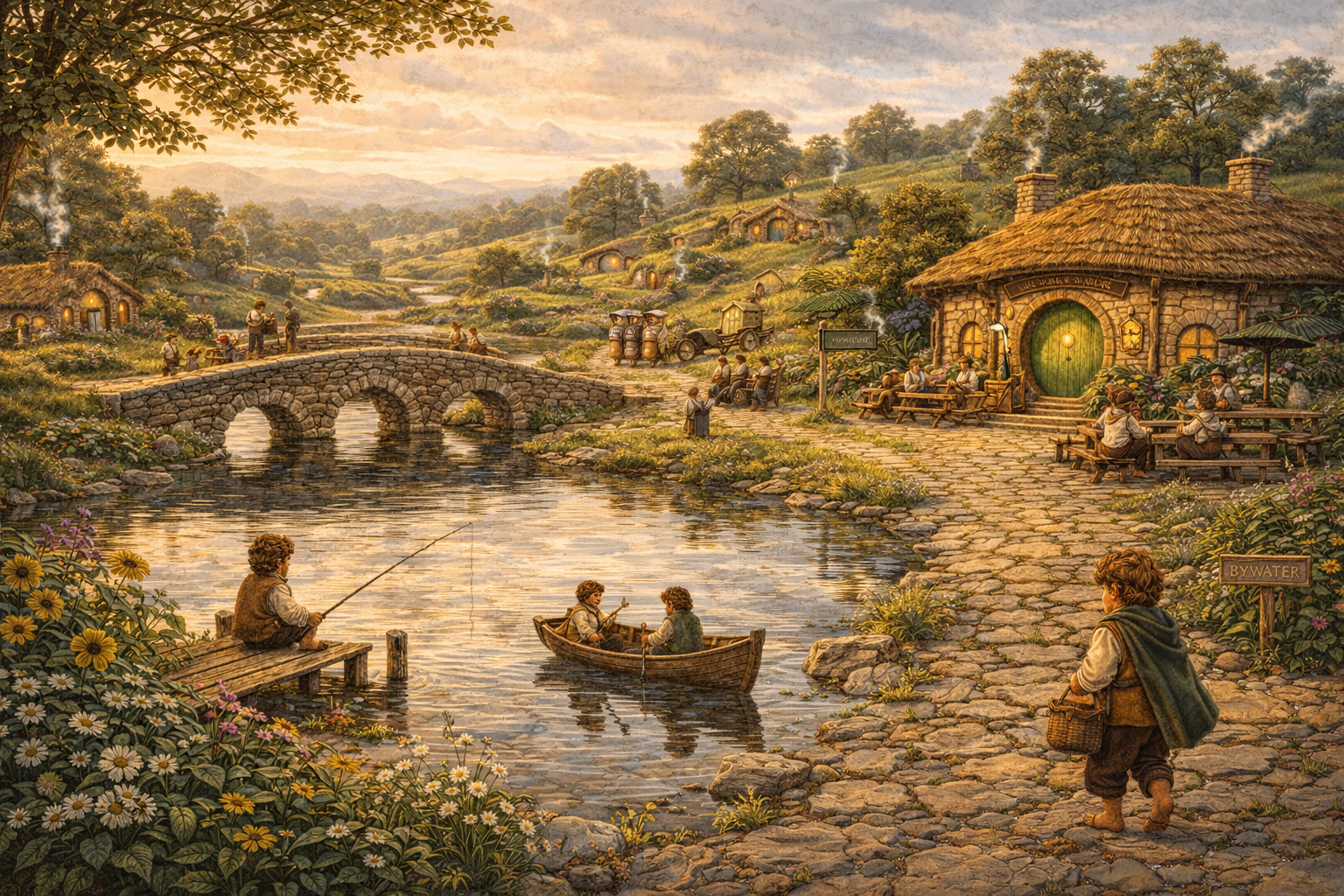
Bywater
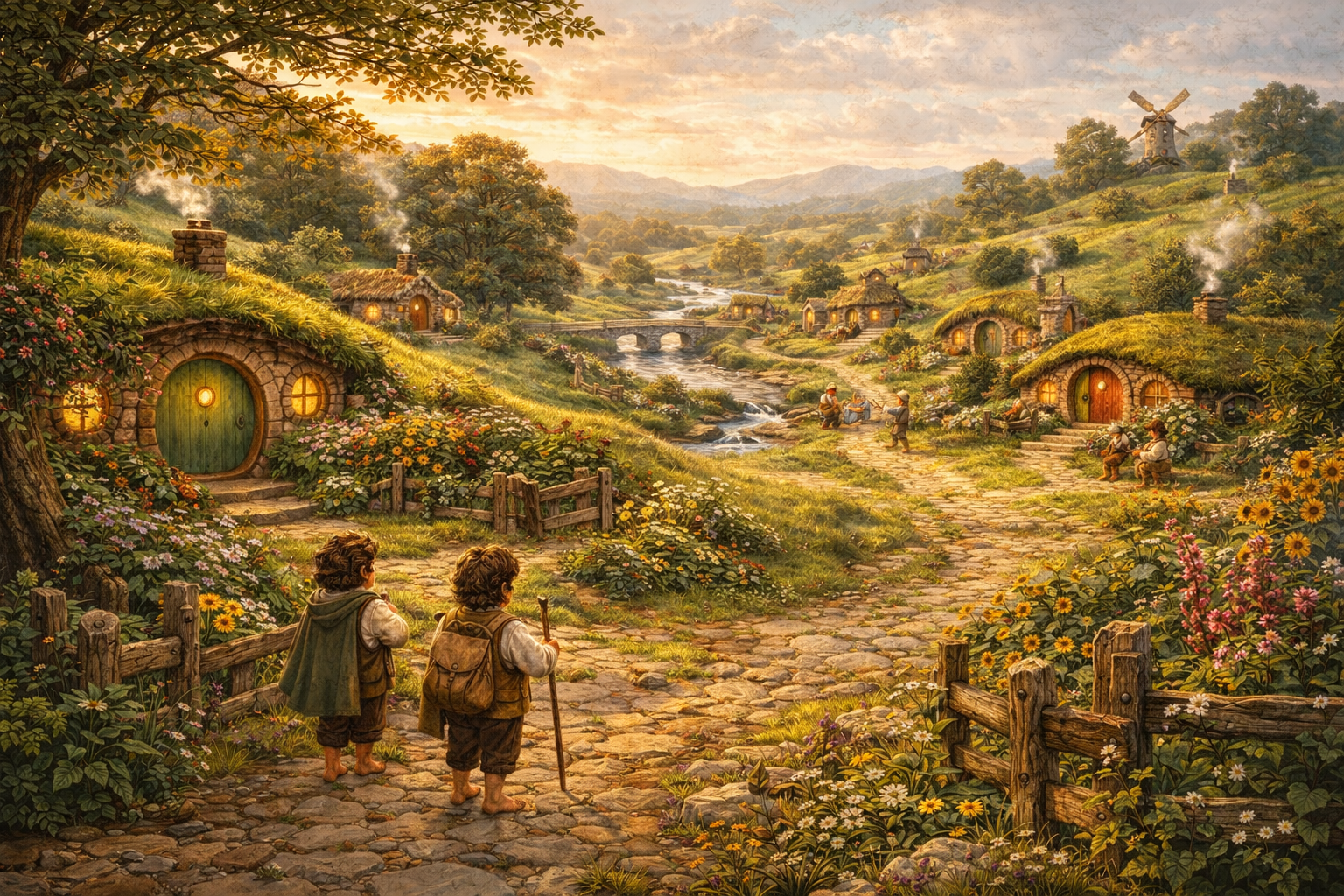
Bywater is a working village with mills and workshops. It later becomes a focal point during the Scouring of the Shire.
Michel Delving
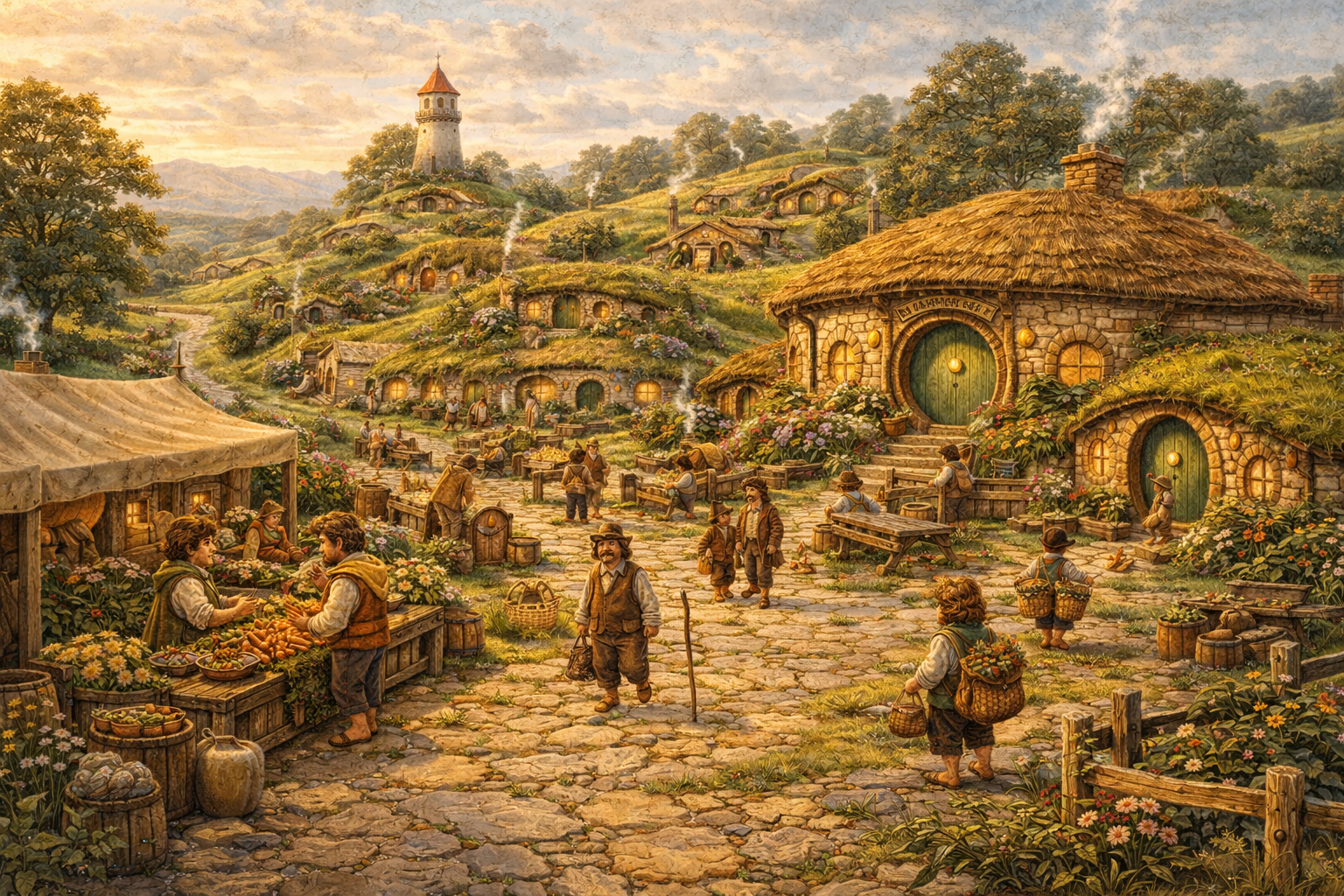
Michel Delving is the largest town in the Shire and serves as its administrative center. It is home to the Mathom-house, a museum for family heirlooms and curiosities.
Buckland
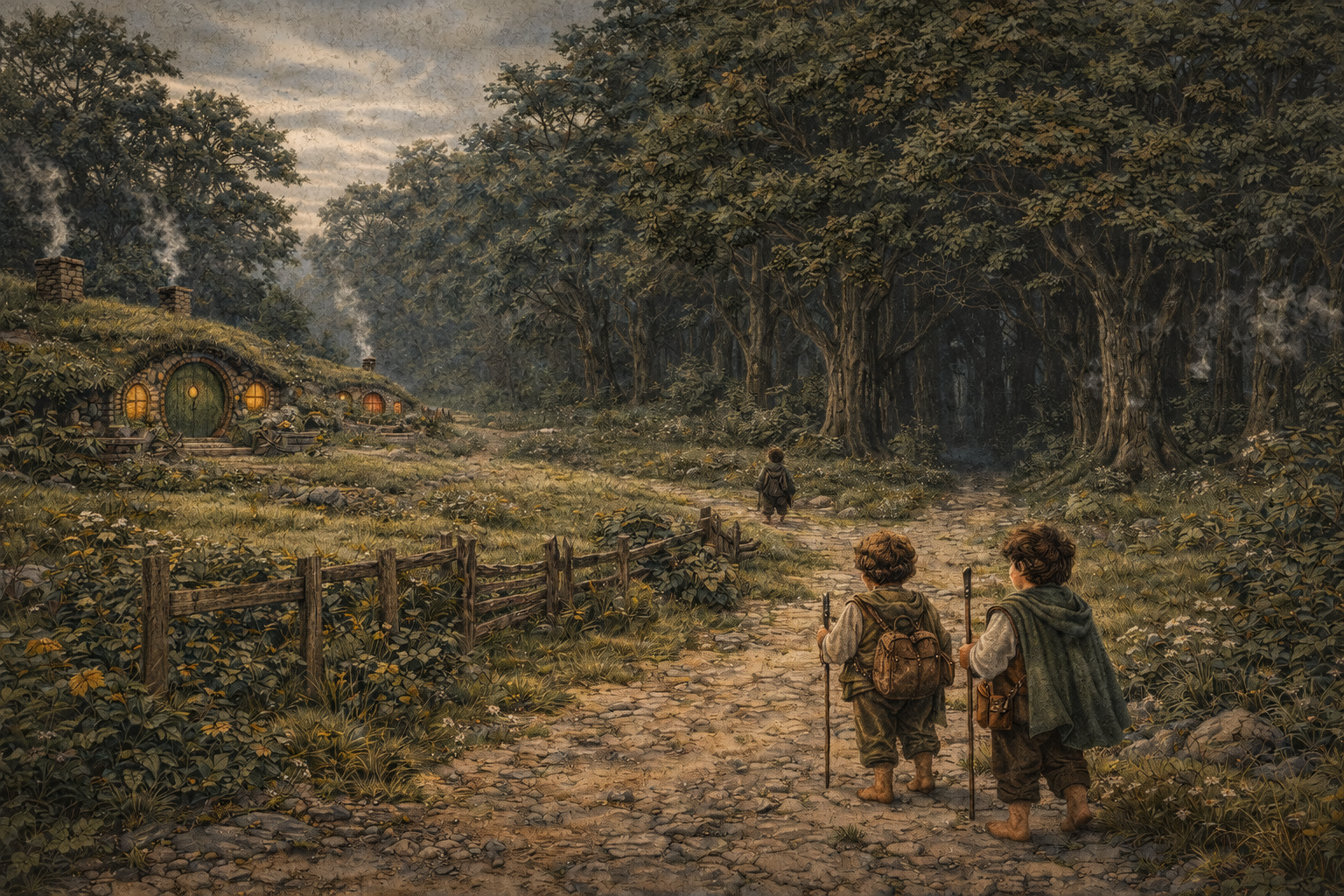
Buckland lies east of the Brandywine River and is settled primarily by the Brandybuck family. Bucklanders are often considered more adventurous and outward-looking than other Hobbits.
Culture and Daily Life of the Shire
Hobbit society in the Shire is agrarian and tradition-focused. Farming, gardening, brewing, and baking form the backbone of daily life.
Hobbits value comfort, routine, and hospitality. Large families, detailed genealogies, and social gatherings - especially meals - are central to their culture.
Technological innovation is viewed with suspicion, and heavy industry is actively resisted, a theme that becomes critical later in Shire history.
Economy and Trade of the Shire
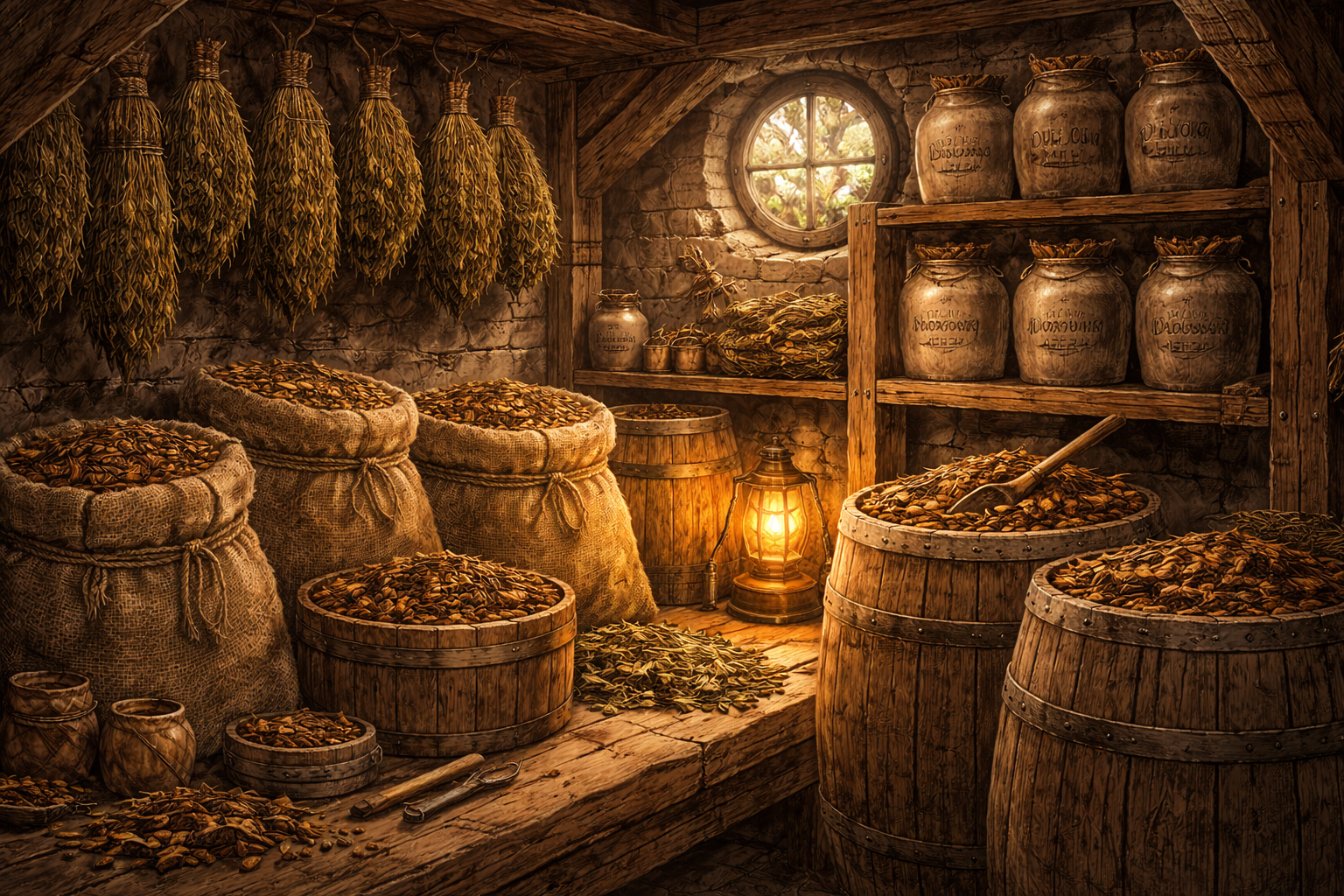
The Shire is largely self-sufficient, producing most of what it needs locally. Major products include grain, vegetables, wool, leather goods, beer, and pipe-weed.
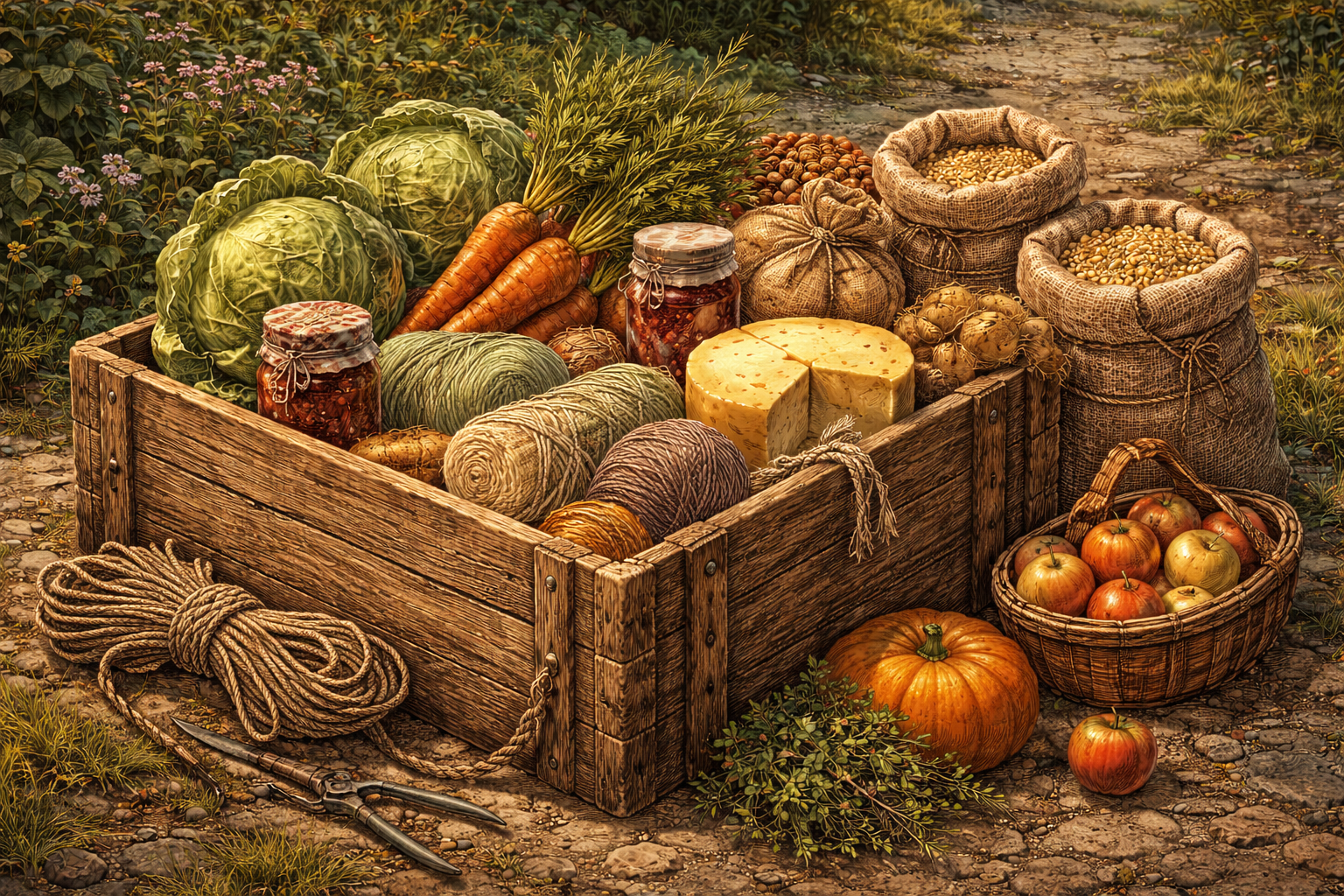
Limited trade occurs primarily with Bree, where Hobbits exchange surplus goods for items not commonly produced within the Shire.
Language, Calendar, and Reckoning of the Shire
Hobbits speak Westron, the Common Speech, with distinct regional accents.
They use the Shire Reckoning calendar, which begins in T.A. 1601 and includes unique festival days. Birthdays are culturally significant, with gifts traditionally given by the celebrant.
The War of the Ring and the Scouring of the Shire
Occupation of the Shire
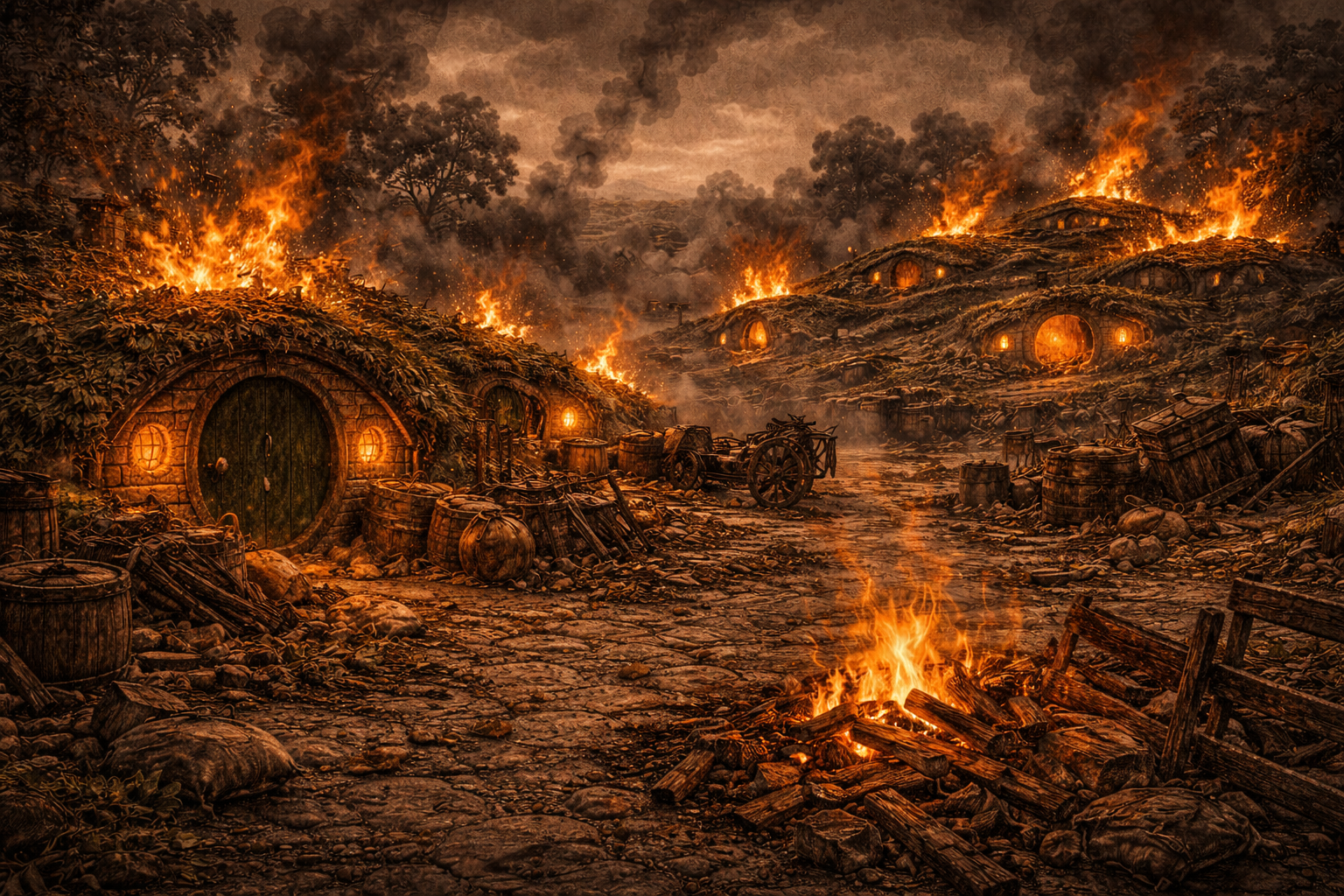
During the War of the Ring, the Shire is occupied by ruffians acting under the authority of Saruman, known locally as “Sharkey.” Industrial damage, rationing, and intimidation disrupt Hobbit life.
The Battle of Bywater
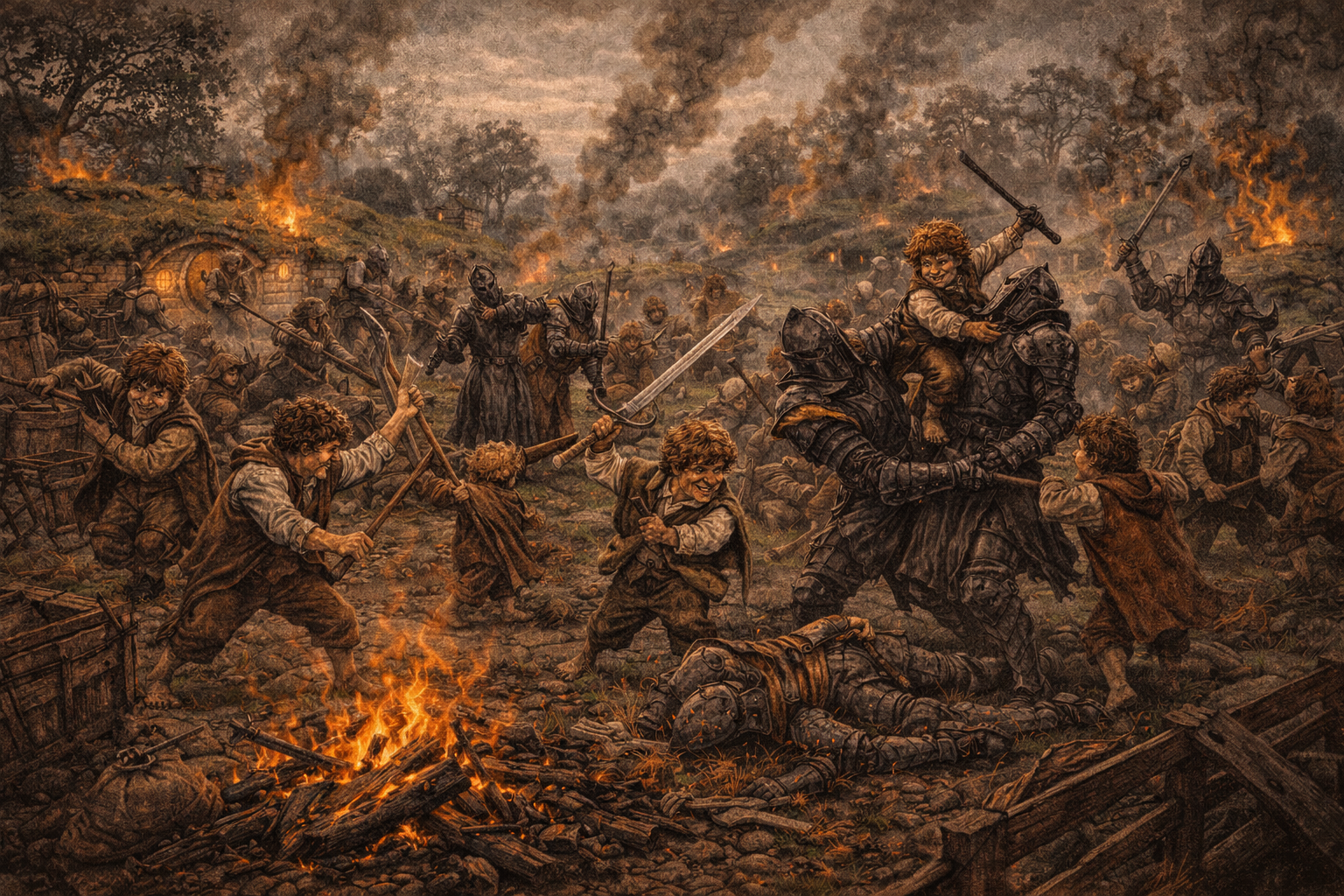
In Third Age 3019, returning Hobbits lead a local uprising culminating in the Battle of Bywater, the only recorded organized battle fought within the Shire.
This event marks the successful liberation of the Shire and the fall of Saruman’s influence there.
The Shire in the Fourth Age
After the War of the Ring, the Shire is placed under the formal protection of King Elessar. Men are forbidden from entering without permission, preserving Hobbit autonomy.
The land recovers rapidly, particularly through the efforts of Samwise Gamgee, who later serves multiple terms as Mayor.
Symbolism and Legacy of the Shire
The Shire represents the ordinary world worth saving - a place of peace, memory, and continuity. Tolkien deliberately contrasts it with the ambitions of empires and the corrupting pursuit of power.
Though geographically small, the Shire’s legacy is immense, proving that even the most unassuming people can shape the fate of the world.